Electrical control circuits form the backbone of industrial automation, building management, and modern electrical systems. A key factor in ensuring these circuits operate efficiently and safely is the use of relays. Understanding different relay types not only improves system reliability but also enhances operational flexibility and longevity.
The Role of Relays in Control Circuits
Relays act as electrically operated switches that allow circuits to be controlled without direct human intervention. They isolate sensitive components from high-current or high-voltage sections, ensuring safety and reducing wear on critical devices. By choosing the right relay type for a particular application, engineers can prevent unnecessary downtime and improve overall circuit performance. Engineers study relay types for selecting suitable components.
Benefits of Proper Relay Selection
- Enhanced Safety – Relays provide electrical isolation, protecting both operators and equipment from high-voltage hazards.
- Increased Longevity – Using suitable relay types minimizes mechanical stress and heat generation, extending device life.
- Operational Efficiency – Correct relay selection ensures faster response times and precise control over complex circuits.
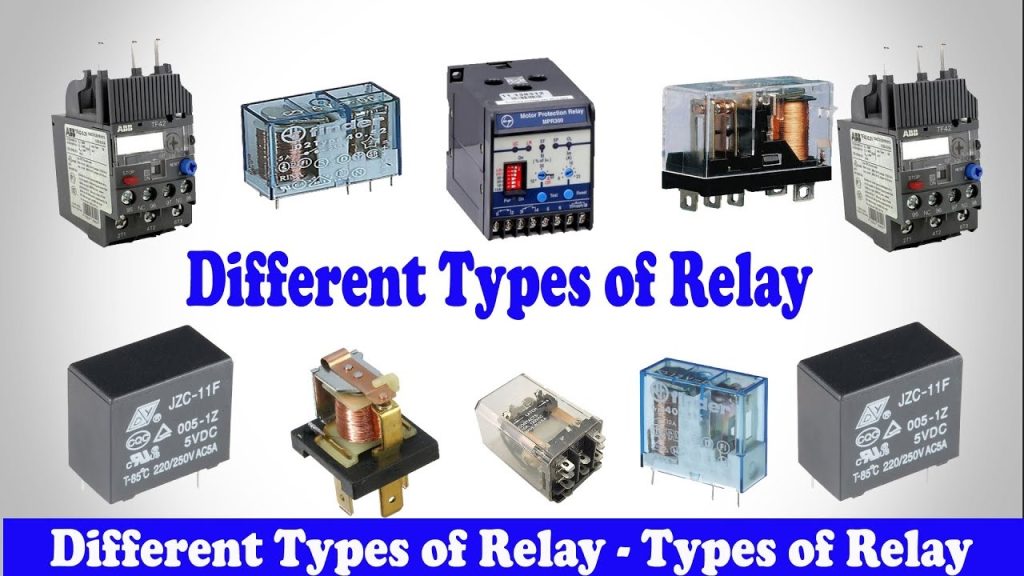
Types of Relays and Their Applications
Understanding the different relay types is essential for designing reliable control circuits. Here’s a breakdown of common categories:
1. Electromechanical Relays (EMR)
- Function – Utilize physical contacts actuated by an electromagnet.
- Advantages – High switching capacity and visual indication of operation.
- Applications – Ideal for industrial machinery, motor control, and general-purpose switching.
2. Solid State Relays (SSR)
- Function – Operate without moving parts, using semiconductor devices.
- Advantages – Silent operation, fast switching, and long operational life.
- Applications – Suitable for high-speed automation systems, heating control, and sensitive electronic equipment.
3. Latching Relays
- Function – Maintain their state after being actuated until a reset signal is received.
- Advantages – Energy-efficient and reliable for memory retention in circuits.
- Applications – Useful in remote control systems, alarm circuits, and energy-saving devices.
4. Time-Delay Relays
- Function – Activate or deactivate contacts after a preset delay.
- Advantages – Allow precise timing control and sequence operations.
- Applications – Widely used in industrial process control, motor protection, and lighting systems.
Tips for Optimizing Circuit Reliability
- Understand Load Requirements – Ensure the relay can handle voltage, current, and switching frequency demands.
- Consider Environmental Conditions – Temperature, humidity, and vibration can affect relay performance.
- Plan for Redundancy – Implement backup relays in critical systems to maintain uninterrupted operation.
- Regular Maintenance – Periodic inspection and testing prevent premature failures and improve reliability.
Conclusion
Mastering relay types and their applications empowers engineers to design control circuits that are safe, efficient, and long-lasting. By carefully selecting and implementing the appropriate relay, electrical systems achieve higher reliability, reduced downtime, and enhanced operational performance. A clear understanding of relay characteristics ensures circuits perform consistently under various conditions, strengthening both industrial and commercial electrical applications.